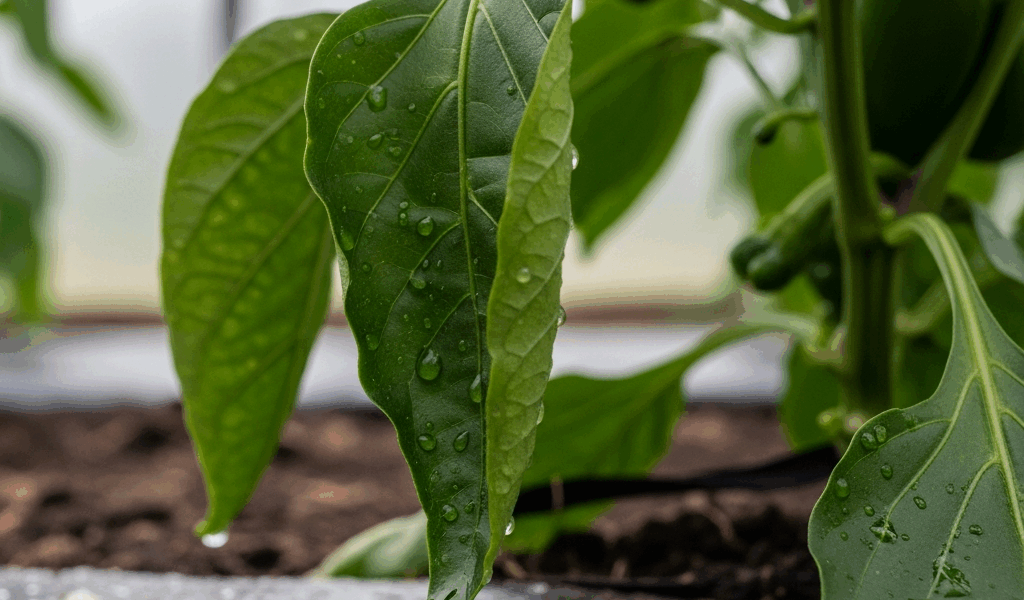
Pepper leaves curling downward are a symptom, not a diagnosis. The direction of curl alone cannot tell you whether the cause is watering, heat, aphids, mites, herbicide exposure, edema, disease, or another stress. Before adding fertilizer or spraying anything, inspect which leaves are affected, whether new growth is distorted, how the soil drains, and what appears on the leaf undersides.
The fastest safe approach is to separate a temporary whole-plant response from localized damage. Curl that appears during hot, windy afternoons and relaxes overnight points toward environmental stress. Persistent twisted new growth, sticky residue, insects, corky blisters, mosaics, or damaged neighboring plants require a different investigation.
Quick pepper-leaf curl diagnosis
| What you observe | Likely category | Next check |
|---|---|---|
| Leaves curl or wilt in afternoon heat, then recover | Heat, wind, or temporary moisture stress | Check soil moisture several inches deep and observe again after sunset |
| Wet soil plus yellowing, wilting, or stalled growth | Poor drainage or root stress | Check drainage, recent rain, irrigation, and roots before watering again |
| Sticky leaves, ants, or visible soft-bodied insects | Aphids | Inspect young growth and undersides for colonies and shed skins |
| Severely puckered or hardened new growth; mites not readily visible | Broad or cyclamen mites, herbicide injury, or other distortion | Use magnification and seek extension or diagnostic-lab confirmation |
| Brown or corky blisters, especially under older leaves | Edema | Review cool, humid, overwatered conditions and airflow |
| Mosaic, rings, unusual banding, bumps on fruit, or progressive stunting | Possible virus | Isolate the plant and request a formal diagnosis |
| Several nearby broadleaf plants show twisted, strap-like growth | Possible herbicide drift or residue | Review spraying, compost, manure, and neighboring applications |
Step 1: inspect before treating
Photograph the entire plant and both sides of affected leaves. Note whether symptoms began on old leaves, new leaves, one branch, or the whole plant. Look for insects, webbing, honeydew, shed skins, spots, mottling, blisters, scorched margins, and stem lesions. Compare the pepper with nearby plants exposed to the same irrigation and weather.
Do not remove every curled leaf immediately. The pattern helps identify the cause, and green leaves still photosynthesize. Remove tissue only when it is dead, heavily diseased, or a confirmed sanitation risk. Sterilize tools between suspect plants.
Water and drainage problems
Both drought and waterlogged soil can leave a pepper unable to supply its leaves normally. Dry soil limits water uptake; saturated soil deprives roots of oxygen and encourages root disease. That is why “curl equals overwatering” is not a reliable diagnosis.
Check moisture below the surface near the root zone. A dry top inch does not prove that the container is dry throughout, and a damp surface does not reveal whether water is perched at the bottom. Containers need unobstructed drainage holes and a porous potting mix. In-ground peppers do best in well-drained soil; a persistently wet site may need raised beds rather than a short pause in watering.
The University of Minnesota Extension pepper guide recommends consistent moisture and deep watering instead of light surface sprinkling. Frequency depends on rainfall, soil texture, temperature, plant size, mulch, and container volume. Do not follow a universal “every three days” schedule.
If roots are suspected, slide a container plant out only when that can be done without tearing the root ball. Healthy roots are generally firm; dark, soft, foul-smelling tissue suggests decay. Do not automatically cut roots and leave the plant dry for several days. Correct the drainage problem and seek local diagnostic advice when root disease is extensive.
Heat, sun, and wind stress
Hot, windy conditions can pull water from leaves faster than roots replace it. Peppers may fold leaves inward, wilt, drop flowers, or pause growth. A plant that recovers in the evening without persistent discoloration is more consistent with temporary environmental stress than a pest or virus.
Water deeply at the soil level in the morning, mulch while keeping material away from the stem, and use temporary afternoon shade during an extreme heat event. Shade percentage and duration should match local climate; permanent heavy shade can reduce flowering and growth. Avoid frequent shallow watering, which encourages shallow roots.
Aphids: visible insects and sticky honeydew
Aphids commonly feed on pepper growth and can cause curled, yellowed, or distorted leaves. They are small, soft-bodied insects found on tender shoots and leaf undersides. Sticky honeydew, ants, or sooty mold can accompany a colony.
Many aphid populations cause little lasting damage and are controlled by natural enemies. The University of Minnesota Extension aphid guide recommends nonchemical or low-risk controls in most home-garden cases. Start with a firm water spray that knocks aphids from the plant, while supporting stems and avoiding soil splash.
If treatment is justified, choose a product whose label lists the crop and pest. Insecticidal soap or horticultural oil must contact the insects to work and may injure drought-stressed plants or foliage treated during unsuitable heat. Follow the label’s dilution, temperature, repeat-application, pollinator, and harvest directions. “Organic” does not mean risk-free.
Broad mites and cyclamen mites
Broad mites and cyclamen mites can distort tender new growth, creating puckered, curled, hardened, or stunted leaves. Adults are about 0.25mm long, so damage is often more obvious than the pest. A basic hand lens may not provide a confident identification, and similar symptoms can result from herbicide injury, nutrient problems, or unfavorable conditions.
The University of California IPM guide lists horticultural oil, insecticidal soap, neem oil, and wettable sulfur as potentially effective home-garden options, while warning that pesticide availability and guidance change. This contradicts blanket claims that neem never works for broad mites. Correct identification, thorough label-compliant coverage, and protection from phytotoxicity are essential. Sulfur and oil products can injure plants when used too close together; obey both labels.
For a valuable plant or uncertain infestation, send clear photos or a sample to a cooperative-extension office or plant diagnostic laboratory before spraying repeatedly.
Edema: corky bumps caused by a water imbalance
Edema occurs when roots absorb water faster than leaves can transpire it. Cool, humid, overcast conditions, excess soil moisture, and poor air circulation favor the disorder. Look for pale blisters that become brown, corky, or scab-like, often on the undersides of older leaves. Existing damage will not disappear, but new damage should stop after conditions improve.
The University of Maryland Extension edema guide recommends letting the upper soil dry appropriately between waterings and improving spacing and airflow. Do not treat edema with an insecticide or fungicide.
Herbicide injury
Growth-regulator herbicides and other products can produce cupped, twisted, strap-like, thickened, or stunted growth. Drift is one route, but contaminated sprayers, grass clippings, manure, compost, and mulch can also expose vegetables. Damage on several kinds of broadleaf plants at the same time—or stronger injury on the side facing a spray source—is an important clue.
Do not eat produce when pesticide exposure is suspected until the product and exposure are identified and qualified local guidance confirms what is safe. Record dates, weather, nearby spraying, products used, and photographs. Contact your extension service or state pesticide agency.
Virus symptoms require confirmation
Viruses can cause twisted leaves, yellow or dark-green mosaic patterns, rings, stunting, and bumpy or distorted fruit. There is no curative spray. Because mites, herbicides, and nutrient disorders can look similar, do not remove a plant based on curling alone.
Isolate a strongly suspicious container plant, avoid moving sap between plants, control confirmed insect vectors, and obtain a diagnosis. If a virus is confirmed, extension guidance commonly recommends removing the affected plant and managing nearby weeds and vectors rather than composting infected tissue for reuse.
What not to do
- Do not add calcium, magnesium, or Epsom salt based only on leaf curl.
- Do not spray several pesticides “just in case.”
- Do not assume every downward-curled leaf means too much water.
- Do not apply sulfur near an oil treatment or outside label temperature limits.
- Do not fertilize a plant with damaged or waterlogged roots.
- Do not promise recovery in 24 hours; response depends on the cause and damage.
When to seek local help
Contact a cooperative-extension office or plant diagnostic lab when new growth remains severely distorted, symptoms spread plant to plant, fruit is affected, the plant continues declining after irrigation is corrected, or you suspect herbicide exposure or a virus. Submit photos of the whole plant, both leaf surfaces, stems, fruit, growing site, and unaffected comparison plants.
Bottom line: diagnose the pattern before treating. Inspect moisture and drainage, observe whether heat-related curl reverses, look under leaves for aphids, distinguish mite-like distortion from herbicide or virus symptoms, and use pesticide labels—not generic internet schedules—as the legal instructions.


Stay in the loop
Get the latest the gardening nook updates delivered to your inbox.