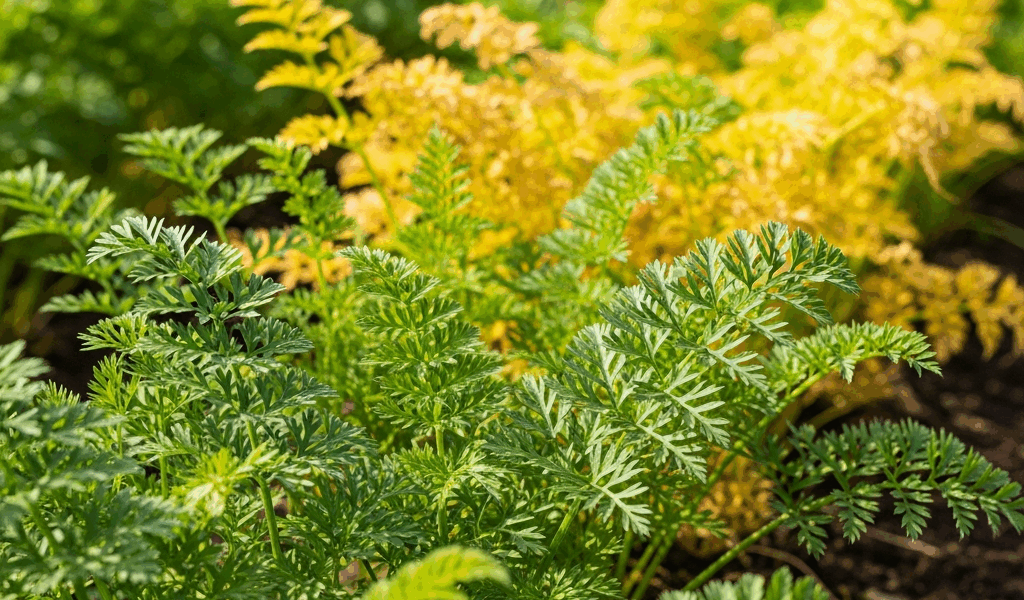
Why Are My Carrot Leaves Turning Yellow
Carrot leaves turning yellow has gotten complicated with all the conflicting advice flying around. Is it overwatering? A fungus? Something eating your roots from underneath? I’ve been growing carrots in my backyard for going on eleven years now, and I’ve killed entire patches trying to figure this out the hard way. Today, I will share it all with you — the real causes, what they actually look like up close, and what fixes them without wasting a season.
The short version: there are five main culprits. Overwatering, nitrogen deficiency, fungal disease, pest damage, and natural aging. Each one leaves a different fingerprint on your plants. Once you know what to look for, diagnosing the problem takes about ninety seconds in the garden.
Overwatering or Poor Drainage Is the Most Common Cause
Probably should have opened with this section, honestly. My first real carrot season — this was back in 2013 — I drowned more plants than I harvested. Waterlogged soil suffocates root systems. Carrot roots need oxygen as much as they need water, maybe more. When soil stays soggy for three or four days straight, the roots stop functioning, and the plant signals distress by yellowing from the bottom up. Lower leaves go pale first. Then the discoloration climbs.
Here’s the easiest field test: push your finger two inches into the soil near the base of your plants. Soggy or muddy? That’s your answer. Carrot soil should feel like a wrung-out sponge — moist, but not dripping. Heavy clay holds water dramatically longer than sandy loam, so if your garden sits on clay, you’re fighting an uphill battle without amendments.
The fix isn’t complicated. Water less frequently. Carrots want roughly one inch of water per week total — rain counts toward that. After heavy rainfall, skip your next scheduled watering entirely. Work two to three inches of compost into your bed before next season’s planting. If your carrot patch sits in a low spot where water visibly pools after rain, build a raised bed or mound the soil. Waterlogged roots also rot fast — we’re talking a full patch wiped out inside a week. Don’t make my mistake.
Nitrogen Deficiency Turns Carrot Leaves Pale Yellow
But what is nitrogen deficiency, visually? In essence, it’s a uniform, washed-out paleness across the oldest leaves — not patchy, not spotted, just faded. But it’s much more than that. The whole plant stalls. Growth slows. The carrots look half-dead even on a perfect July afternoon with no drainage problems whatsoever.
Sandy soils are the usual suspect. They don’t hold nutrients well. I’m apparently someone who thought sandy loam was “fine without amendments,” and growing carrots in unamended sandy soil works for maybe three weeks before the plants start screaming at you. A $15 soil test from your local extension office would have told me exactly what was missing. I didn’t do one. That was mistake number two in my carrot career.
Side-dress with a balanced vegetable fertilizer — something like a 10-10-10 NPK formula works well, or a few inches of well-aged compost worked into the soil around the base of your plants at the midpoint of the growing season. Keep the fertilizer about two inches back from the carrot tops to avoid foliar burn, then water it in slowly. Most plants green back up within two weeks of a single application. One hard warning though: nitrogen excess produces spectacular leafy tops and stunted, spindly roots. Too much undoes everything you’re trying to accomplish.
Fungal Disease and Leaf Blight Can Cause Yellowing
Frustrated by vague descriptions of “leaf disease,” I spent one entire summer photographing every yellow spot on my carrot plants just to figure out what I was actually dealing with. The two main fungal culprits are Alternaria leaf blight and Cercospora leaf spot — and learning to tell them apart genuinely matters for treatment.
Alternaria starts small. Dark spots with yellow halos, almost like tiny bullseyes scattered across the leaf surface. They expand over time and eventually merge. The yellowing clusters around the lesion itself rather than spreading uniformly. Cercospora looks different — smaller tan or brown spots with sharply defined yellow borders, usually hitting lower leaves before anything else. Both thrive in humid conditions. Both spread when foliage stays wet overnight.
First move: improve airflow. Space carrots at least three inches apart — I use a marked dowel rod to keep spacing consistent when thinning. Stop watering overhead immediately. A drip line or soaker hose keeps moisture off the foliage entirely. Pull any yellowed or spotted leaves by hand and bag them for the trash, not the compost pile. If the disease is already spreading aggressively, a copper-based fungicide applied on a seven to ten day schedule slows it down. Read the label carefully — some copper formulations burn foliage badly if you spray during peak afternoon heat.
Pests and Natural Aging Can Also Be the Culprit
Carrot fly larvae tunnel through roots underground, and the above-ground symptoms mimic disease almost perfectly. Foliage yellows, wilts, and collapses even in good soil with proper watering. Pull up an affected carrot and look for tiny holes or narrow tunnels bored through the root — that’s your confirmation. Floating row covers over the bed from planting through establishment stop carrot flies before they lay eggs near your plants.
Aphids work differently. They feed on leaf sap directly and cause yellowing through that feeding pressure. The identification is easy — flip a leaf over and look at the underside. Aphid infestations are visible to the naked eye, usually clustered in dense colonies. A strong blast from a garden hose knocks them off. Repeat every two or three days and they typically don’t recover.
That’s what makes natural aging endearing to us gardeners — it’s the one “problem” that actually means everything is going right. Lower leaf yellowing confined to the bottom two or three leaves near harvest time is completely normal carrot behavior. Carrots are biennials. As the plant matures and pushes energy into root development, it sheds older foliage. If the upper growth looks healthy and green, you’re not dealing with disease or pests. You’re dealing with a plant doing exactly what it should. Pull those carrots and enjoy them.
Quick troubleshooting checklist:
- Yellowing starts on lower leaves and soil is wet → overwatering
- Uniform pale yellowing across older leaves, slow growth → nitrogen deficiency
- Dark spots with yellow halos or tan spots with yellow borders → fungal disease
- Visible insects clustered on leaf undersides → aphids
- Root tunnels present, foliage wilting → carrot fly larvae
- Lower leaves only yellowing, plant otherwise healthy, near harvest → natural aging, no action needed


Stay in the loop
Get the latest the gardening nook updates delivered to your inbox.