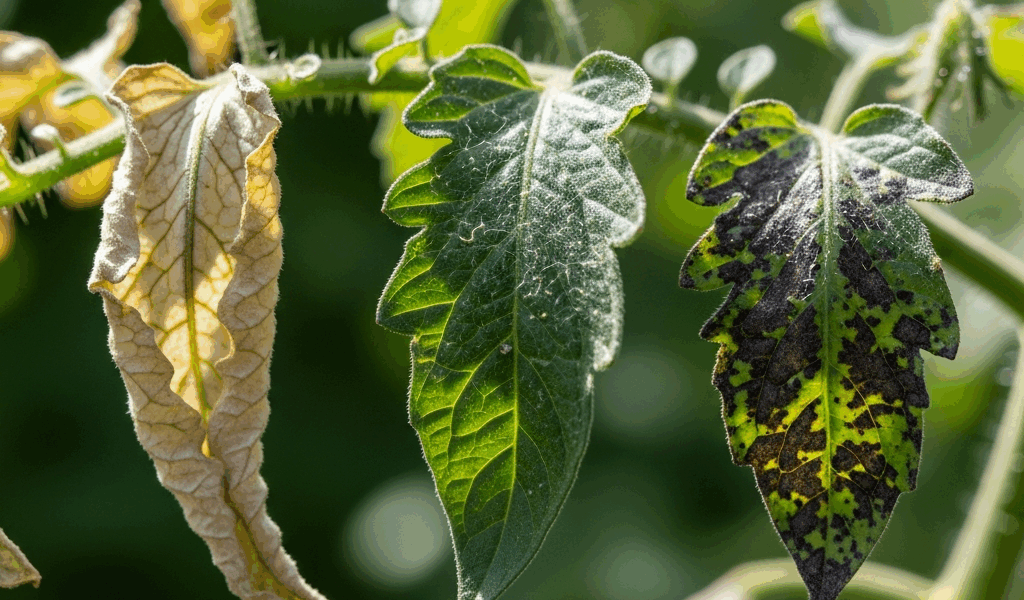
Why Tomato Leaves Curl Down in the First Place
Tomato leaf curl has gotten complicated with all the conflicting advice flying around. Downward curl, upward curl — most people treat them the same way. I learned everything there is to know about this distinction after three summers diagnosing the wrong problem entirely. Today, I will share it all with you.
Downward leaf roll is its own thing. It has its own causes — some fixable overnight, some not fixable at all, but every single one is identifiable once you know the signs. We’re talking herbicide drift, mite infestations, and plain old physiological stress from heat or water. Different problems. Very different solutions.
Herbicide Drift or Contaminated Soil
Probably should have opened with this section, honestly. It’s the most dramatic cause visually and simultaneously the most misdiagnosed thing in the vegetable garden. Broadleaf herbicides — specifically 2,4-D and dicamba — produce a cupping and downward roll pattern unlike anything else your tomatoes will ever do.
New growth shows it first. Leaf margins twist inward and curl down hard. Stems go flat, almost ribbon-like. The affected leaves look waxy — plasticky, really — rather than naturally wilted. I watched this happen to a neighbor’s tomatoes after someone two yards over sprayed a dandelion patch on a breezy afternoon. One spray application, wrong wind direction, and the damage showed up within 48 hours.
Drift travels further than gardeners expect. A neighbor’s weed killer, commercial lawn treatment particles riding the wind, contaminated compost from a local supplier — any of these can do it. Some gardeners unknowingly buy potting mix blended with herbicide-laden clippings or treated wood chips. The soil looks fine. The tomatoes tell a different story.
What to look for:
- New growth twisted and severely cupped — not older leaves drooping, specifically the newest flush
- That plasticky, artificially distorted appearance on affected leaves
- No insect activity visible even under a loupe or hand lens
- Sudden onset after nearby lawn treatment, or shortly after planting into new soil or compost
The bad news first: affected growth is gone. It won’t recover. The good news is that flushing the soil with clean water and cutting off further exposure usually lets new growth emerge completely clean. Remove the worst leaves. Let the plant redirect energy toward fresh growth. Container plant? Pull the soil entirely and start with a fresh bag — something like FoxFarm Ocean Forest or a similar clean mix.
Broad Mite or Russet Mite Infestation
But what is mite damage, exactly? In essence, it’s feeding injury from insects too small to see without magnification. But it’s much more than that — the curl pattern alone can mimic herbicide, which is why this one trips people up constantly.
Broad mites and russet mites clock in around 0.2 millimeters. You will not see them without a 20x loupe at minimum. What you will see is bronzing — a dull, coppery or silvery sheen on leaf stems and undersides — alongside the downward curl. The texture of affected leaves changes too. Leathery. Sometimes stippled. The curl almost always starts at the top of the plant and migrates downward over time. That top-down progression is the tell.
I’m apparently someone who runs greenhouse humidity too high, and that’s exactly how I caught a russet mite problem on a tomato crop three seasons ago. Humidity stayed above 72% for two weeks straight during a warm stretch. Mites exploded. Don’t make my mistake — keep airflow moving and pull humidity down if you’re growing under cover.
Treatment requires consistency. One spray does nothing. Here’s what works:
- Insecticidal soap — Safer Brand or Bonide both work — every 5 to 7 days for three full applications, hitting both leaf surfaces thoroughly
- Neem oil at 1 to 2% mixed concentrate, repeated every 7 to 10 days; stop applications when daytime temps push past 85°F or you’ll burn the foliage
- Micronized sulfur at 2 to 3 teaspoons per gallon — effective stuff, but wait at least two weeks after any oil application before switching to sulfur, or you’ll cause phytotoxicity
Spray early morning or late evening. Mites retreat during peak heat — timing your applications around that behavior matters more than most people realize. Flip every leaf on new growth and inspect obsessively during the treatment window. Three clean cycles with no fresh damage and you can step back to routine monitoring.
Physiological Leaf Roll From Heat or Overwatering
Not every downward curl is a crisis. Sometimes it’s the plant doing exactly what it’s supposed to do — and that’s what makes tomatoes endearing to us gardeners. They communicate.
Heat-induced roll kicks in when daytime temps spike past 90°F and nights stay warm too. Tomatoes close their stomata to conserve moisture and the leaves curl down as a protective response. It looks alarming. It’s actually fine. The plant is managing itself.
Overwatering triggers something similar but through a different mechanism entirely. Waterlogged soil starves roots of oxygen. The plant curls leaves down to reduce transpiration and slow water movement. I left a drip irrigation line running through a rainy stretch once — San Marzano tomatoes, mid-July — and within 36 hours the downward curl had set in across every plant in the row. Soil was soggy three inches down. Classic self-inflicted problem.
How to separate physiological stress from pest or chemical damage:
- No discoloration — leaves stay genuinely green, no bronzing or stippling
- New growth looks completely normal — only mature leaves are rolling
- The pattern is uniform across the whole plant, not patchy or clustered
- Timing lines up with a heat event or a change in your watering schedule
The fix is simple. Water consistently — somewhere between 1 and 2 inches per week depending on your soil and temperatures. Shade cloth rated at 30 to 50% helps enormously during afternoon heat peaks. A 2 to 3 inch layer of straw or compost mulch around the base keeps soil temperature and moisture stable between waterings. Give it three or four days of consistent conditions and the leaves usually uncurl on their own.
How to Confirm the Cause and What to Do Next
So, without further ado, let’s dive into the actual diagnostic process. Run through this checklist against what you’re seeing:
- When did it appear? Sudden twisted, plasticky new growth = herbicide. Gradual bronzing and curl moving down from the canopy top = mites. Curl appearing right after a heat spike or heavy rain = physiological stress.
- Which leaves? Only the newest flush affected = herbicide or mites. Older and newer leaves both curling = physiological stress.
- Any color changes? Bronzing, silvery sheen, stippling = mites. No color change at all = herbicide or heat and water stress.
- Recent chemical exposure nearby? Neighbor sprayed last week? You used new compost from an unfamiliar source? That narrows it fast.
- Get a loupe and check the undersides of new leaves. Tiny moving dots, even faint ones = mites confirmed. Nothing visible = chemical or physiological cause.
Most downward curl is treatable — at least if you catch it before the plant is too far gone. Herbicide damage means removing affected growth and blocking further exposure. Mites respond well to consistent treatment over two to three weeks. Heat and water stress resolves once conditions stabilize. Your tomatoes are tougher than they look. Knowing the cause makes the fix the easy part.



Stay in the loop
Get the latest the gardening nook updates delivered to your inbox.