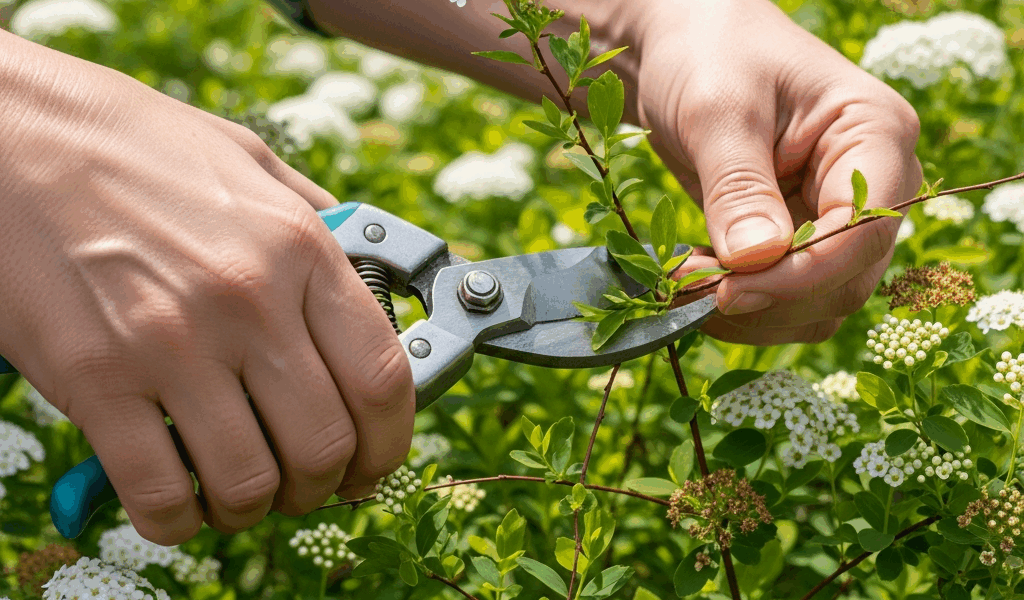
How to Prune Spirea — Timing and Technique for Maximum Blooms
Pruning spirea has gotten complicated with all the conflicting advice flying around. As someone who’s been growing spirea in a central Pennsylvania backyard for about twelve years, I learned everything there is to know about this subject the hard way — mostly by making expensive mistakes with perfectly healthy shrubs. The single biggest error I see, and made myself early on, is treating all spirea like the same plant. They’re not. Spring-blooming and summer-blooming varieties need completely different timing. Prune at the wrong moment and you won’t see a single flower for an entire year. Sometimes two. That’s a frustrating way to learn a lesson that takes thirty seconds to explain correctly.
This guide covers what I actually do in my garden — the timing, the tools, the cuts, and a few things I wish someone had told me before I took hedge shears to a perfectly healthy Bridal Wreath in October.
Spring vs Summer Blooming Spirea — Prune at Different Times
Probably should have opened with this section, honestly. Most pruning guides gloss over this distinction or bury it in a footnote. It deserves front-and-center treatment because getting it wrong doesn’t just reduce your flower count — it eliminates your entire bloom for the season.
Here’s the core distinction:
- Spring-blooming spirea — varieties like Bridal Wreath (Spiraea prunifolia) and Spiraea x vanhouttei — bloom on old wood. Flower buds form on stems that grew the previous year. Prune in fall or early spring and you’re cutting off those buds before they ever open.
- Summer-blooming spirea — varieties like Goldflame, Little Princess, Anthony Waterer, and the Double Play series — bloom on new wood. The plant pushes fresh stems in spring, and those stems carry the flowers. Pruning in late winter actually encourages more vigorous growth and heavier blooms.
If you’re not sure which type you have, bloom time tells you everything. Flowers showing up in April or May? Spring bloomer. Flowers appearing June through August — often with a second flush? Summer bloomer. Most of the compact, colorful-foliage varieties sitting in four-inch pots at Home Depot for around $12 to $15 are summer bloomers. The classic white cascading types are almost always spring bloomers.
Get this identification right before you touch a tool to the plant. Everything downstream depends on it.
How to Prune Summer-Blooming Spirea
Summer-blooming spirea — Goldflame, Little Princess, that whole crowd — are genuinely forgiving plants. That’s what makes them endearing to us beginner gardeners. They bloom on new wood, meaning you can cut them back hard in late winter or early spring. I typically do this in late February or early March here in zone 6b, right before I notice any bud swell — and they come back stronger and fuller every time.
The Basic Late-Winter Prune
Cut the entire shrub back to somewhere between 6 and 12 inches from the ground. While you won’t need a full arsenal of equipment, you will need a handful of reliable tools. I use Felco No. 2 bypass pruners for smaller stems and a Corona RS 7265 folding saw for anything thicker than about three-quarters of an inch. Sharp tools matter here — a dull blade tears bark and leaves a ragged wound that’s slower to heal and more vulnerable to disease.
- Start by removing any dead or damaged canes entirely at the base.
- Cut remaining live stems down to 6 to 12 inches, just above an outward-facing bud at a slight angle.
- Clear debris from the center of the plant — good airflow reduces fungal problems later in summer.
- Step back and assess the overall shape. The goal is a slightly mounded, open form — not a flat-topped block.
The whole job on a mature Little Princess — mine is about four feet wide, planted back in 2015 — takes maybe twenty minutes. The plant leafs out fast, flowers by late June, and if I deadhead the spent blooms in mid-July, I usually get a second flush sometime in August.
Mid-Season Deadheading
Once the first round of flowers fades and turns brown, shear off the top few inches of growth. This removes the spent heads and triggers new growth that produces the second bloom. Simple as that. A pair of ARS HS-KR1000 hedge shears works fine for this — it’s honestly the one situation where shearing is actually appropriate on spirea.
How to Prune Spring-Blooming Spirea
Spring bloomers operate on a completely different schedule and demand more patience. But what is the rule here? In essence, it’s this: wait until the flowers are finished, then prune. But it’s much more than that — the timing of that cut determines whether next year’s display happens at all. That window typically falls sometime in May, depending on your location and cultivar.
Timing the Cut
The moment blooms fade — petals dropping, clusters browning — is your signal. Don’t wait weeks hoping for a second flush that isn’t coming. Get in there within a week or two of bloom fade. The plant will spend the rest of the growing season pushing new growth from the pruned stems, and those new stems are exactly what carry next year’s flower buds.
What to Remove
- Oldest canes first. Look for the thickest, woodiest stems at the base — these are the oldest. Cut them down to ground level. Removing the oldest canes opens up the center and lets younger, more productive wood take over.
- Dead wood. Any cane that didn’t leaf out or flower gets cut out entirely.
- Crossing or rubbing branches. These create wounds that invite disease.
- Overall shaping. Lightly trim the outer edges to maintain the natural arching form. Bridal Wreath looks best when it’s allowed to cascade — don’t fight the growth habit.
What you’re not doing is cutting the whole thing to the ground. That’s for summer bloomers. A spring bloomer cut to the ground in May will survive — but you’ll likely wait two full years for a proper bloom display while it rebuilds.
Don’t make my mistake. In 2014 I cut back a large Bridal Wreath in early April, thinking I was being proactive. It leafed out fine that spring. Zero flowers. Not one cluster. The entire display I’d been looking forward to for months — gone because I pruned six weeks too early. Never prune a spring-blooming spirea in fall. Never prune it in late winter. Every cut you make before flowering removes bud wood and costs you flowers.
Rejuvenation Pruning for Overgrown Spirea
Sometimes a spirea gets away from you. Maybe you inherited a property with shrubs that haven’t been touched in a decade, or life got busy for a few seasons — I’ve been there. An overgrown spirea isn’t a lost cause, but the approach depends — again — on which type you’re dealing with.
Summer Bloomers — Hard Rejuvenation
Cut the entire plant down to 4 to 6 inches from the ground in late winter. All of it. This sounds drastic. It works. Summer-blooming spirea regenerates quickly from the crown — a hard rejuvenation produces a completely fresh framework of stems that blooms reliably for years. The plant will look rough for the first few weeks of spring. By July it’ll be full and flowering.
Spring Bloomers — The Three-Year Method
You can’t do a hard rejuvenation on a spring bloomer without losing multiple years of blooms. Instead, use a phased approach over three growing seasons:
- Year 1: Immediately after flowering, remove one-third of the oldest canes at ground level.
- Year 2: After flowering, remove another third of the oldest remaining canes.
- Year 3: Remove the final third. By this point the shrub is running almost entirely on younger wood and the bloom display will be noticeably improved.
Frustrated by how long this takes? Understandable. But patient gardeners get rewarded with an unbroken bloom display throughout the renewal process rather than a two-year gap of nothing.
Common Pruning Mistakes
After a decade of talking to other gardeners at the local cooperative extension plant sales — the ones held every May at the Penn State Extension office in our county, the kind where you end up buying six things you didn’t plan on — these are the errors I see most often.
Shearing Everything Into a Ball
The round-ball shear job is the most common spirea mistake, apparently. It looks tidy. It destroys bloom wood on spring bloomers and leaves summer bloomers with a dense outer shell of twiggy growth and a dead interior. Spirea should be pruned with bypass pruners making selective cuts — not shaped like a topiary. Save the hedge shears for deadheading only.
Pruning Spring Bloomers in Fall or Winter
Already covered this. Worth repeating. If your spirea blooms in spring, put the pruners away from September through May. The buds for next year’s flowers are sitting on those stems right now. Leave them alone.
Ignoring Dead Wood at the Base
Old, dead canes at the center of the shrub don’t produce anything — they just block light and airflow from the productive wood around them. Every pruning session, regardless of variety or timing, should include a pass through the base to remove any canes that didn’t leaf out.
Using Dull Tools
A dull bypass pruner crushes and tears rather than cuts. That tearing leaves frayed wounds — slow to heal, attractive to fungal pathogens. Sharpen your tools at the start of every season. A basic Lansky puck sharpener runs about $8 and takes three minutes to put a working edge back on a pair of Felcos. No excuse for dull blades.
Pruning Too Late in the Season for Summer Bloomers
Hard pruning a summer-blooming spirea in June or July delays bloom significantly and can leave new growth without enough time to harden before frost. Late winter is the window. Miss it and you’re limited to light shaping — save the hard prune for next February.
Spirea might be the best low-maintenance shrub for most home gardens, as reliable flowering requires only correctly-timed attention. That is because the plant essentially does the heavy lifting itself — you just have to avoid getting in its way at the wrong moment. Know what you’re growing. Prune at the right moment. Use sharp tools. That’s genuinely the whole job.

Stay in the loop
Get the latest the gardening nook updates delivered to your inbox.