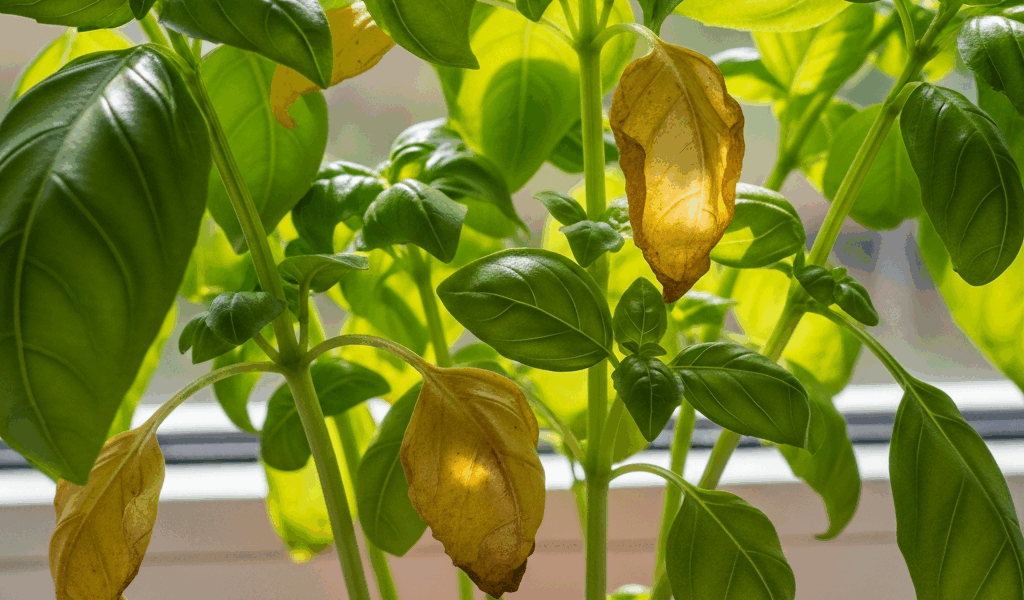
Why Basil Leaves Turn Yellow — Start Here
Basil has gotten complicated with all the conflicting advice flying around. Water more, water less, more sun, less sun — everyone has an opinion, and meanwhile your plant is sitting there looking yellow and defeated. As someone who has killed probably a dozen basil plants before finally figuring this out, I learned everything there is to know about why those leaves go yellow. Today, I will share it all with you.
But what is yellow basil, exactly? In essence, it’s your plant sending a distress signal. But it’s much more than that — it’s a specific clue, and the pattern of yellowing tells you almost everything you need to know if you learn how to read it.
The cause could be overwatering, a nutrient problem, a light issue, or in genuinely rare cases, actual disease. We’ll go through each one in order of how likely it actually is. So, without further ado, let’s dive in.
Overwatering Is the Most Likely Culprit
Probably should have opened with this section, honestly. Overwatering kills more basil than everything else combined — and I say that as someone who drowned at least four plants before accepting the truth.
Here’s what it looks like. Yellowing starts on the lowest leaves first, the oldest ones sitting closest to the soil. They feel soft. Almost mushy. The stems go limp in a way that’s hard to mistake once you’ve seen it. The soil smells faintly sour — not like fresh earth, more like a wet basement. That smell matters. Don’t ignore it.
Use the finger test. Push your index finger about an inch into the soil. Soggy and wet means you’re overwatering. Basil wants moist soil, not waterlogged soil. That distinction sounds minor. It isn’t.
If you’re worried about root damage, pull the plant gently from the pot and look. Healthy roots are white or light tan and firm — almost waxy. Brown, mushy roots that smell rotten mean root rot, and that plant is almost certainly gone. Some browning at the edges with mostly white roots still showing? There’s a real chance of saving it.
The fix is immediate. Stop watering. Move the plant somewhere warm and bright with decent airflow — a south-facing windowsill with a small fan nearby works well. Let the top half-inch of soil dry out before you water again. In summer that might mean every two days. In October, maybe every four or five. I’m apparently a chronic overwaterer, and tracking this on my phone calendar works for me while watering on a fixed schedule never did. Don’t make my mistake.
For container growers — drainage holes are non-negotiable. I use a 60% potting mix and 40% perlite blend in a standard 6-inch terracotta pot. That combination made a noticeable difference almost immediately.
Nutrient Deficiency — Especially Nitrogen
If overwatering doesn’t fit the picture, check nutrients next. Container basil is especially vulnerable here — there’s only so much fertility packed into a small pot, and after four to six weeks of active growth and regular harvesting, that reserve runs out fast.
Nitrogen deficiency has a specific look worth memorizing. Yellowing starts on the oldest, lowest leaves and creeps upward. New growth at the top stays green longer. The whole plant looks pale — not sick exactly, just tired. Faded. Like someone turned the saturation down.
That’s different from overwatering. With overwatering, the stems are limp and the soil is wet. With nitrogen deficiency, the soil is fine, the stems are firm, but the plant just looks like it needs a meal. That visual difference matters when you’re trying to make a quick diagnosis.
The fix is straightforward. A balanced liquid fertilizer — 5-5-5 or 10-10-10 NPK ratio — applied at half-strength every two weeks during the growing season handles it cleanly. I use Espoma Liquid Seaweed, roughly half the label dose, every other Saturday. That’s it. Most people waste enormous energy on complicated nutrient schedules. Basil doesn’t need that level of attention.
For in-ground basil, a light application of compost or Jobe’s Organics granular fertilizer worked into the top inch of soil does the job. Simple. That’s what makes basil feeding endearing to us home gardeners — it responds to basic care without demanding much in return.
Too Much or Too Little Sun — and Heat Stress
Basil wants 6 to 8 hours of direct sun daily — ideally closer to 10. Insufficient light produces a generalized yellowing across both old and new leaves. The plant looks washed out. Leggy. Pale in a way that’s different from nutrient deficiency — more uniform, less bottom-heavy.
If your basil sits on a north-facing windowsill or in a corner that gets indirect light, move it. A south-facing window is the gold standard indoors. East or west-facing is workable. Under grow lights, position them 4 to 6 inches above the canopy and run a 12 to 14 hour cycle — I use a basic outlet timer from Home Depot, about $9, set it and forget it.
Heat stress is the opposite problem. Frustrated by scorched, yellowing tips in a brutal July, I moved my patio basil away from the west-facing brick wall where afternoon temperatures were hitting 95°F on the surface. This new arrangement — morning sun, afternoon dappled shade — eventually evolved into the growing setup enthusiasts know and swear by in hot climates. Yellow tips with a papery, burnt texture that starts at the leaf edge and works inward? That’s heat, not disease. Afternoon shade fixes it.
Fungal Disease or Root Rot — When to Actually Worry
While you won’t need a plant pathology degree, you will need a handful of specific visual clues to rule this one out confidently. Fusarium wilt might be the best option to consider here, as identifying disease requires systematic checking. That is because fungal problems look distinct — stem streaking, uneven collapse, branches dying while others stay healthy.
Cut a stem lengthwise and look inside. Dark discoloration running through the tissue is a real warning sign. So is sudden, rapid yellowing — not the slow creep of nutrient deficiency, but leaves going from green to yellow to dropping off within days. One branch collapses while the one next to it looks perfectly fine. That asymmetry is the tell.
Root rot from a fungal pathogen smells distinctly rotten. Not just wet — rotten. There’s a difference once you’ve encountered it.
If disease is confirmed, the plant isn’t worth saving. Pull it, trash it — not the compost bin, the trash — and start with fresh soil. Clean the pot with a 10% bleach solution before reusing it. That’s roughly 1.5 cups of standard bleach per gallon of water, if you want the actual numbers.
But here’s the honest truth. I’ve grown basil every summer since 2011 and encountered actual fungal disease exactly twice. If your soil drains and you don’t overwater, disease is genuinely unlikely. Don’t let this section send you spiraling when the answer is almost certainly just too much water.
Yellow leaves are solvable. Check soil moisture first. Assess nutrients second. Look at light third. Only then consider disease. Follow that order and you’ll have a working diagnosis within a day — probably faster.


Stay in the loop
Get the latest the gardening nook updates delivered to your inbox.