How to Tell What Is Causing the Yellowing
Spinach yellowing has gotten complicated with all the conflicting advice flying around. Bottom leaves, patchy leaves, mushy leaves — each one means something completely different, and treating the wrong problem makes everything worse. I learned this the hard way after losing an entire spring crop. Thought I was dealing with overwatering. Turned out to be nitrogen starvation the whole time.
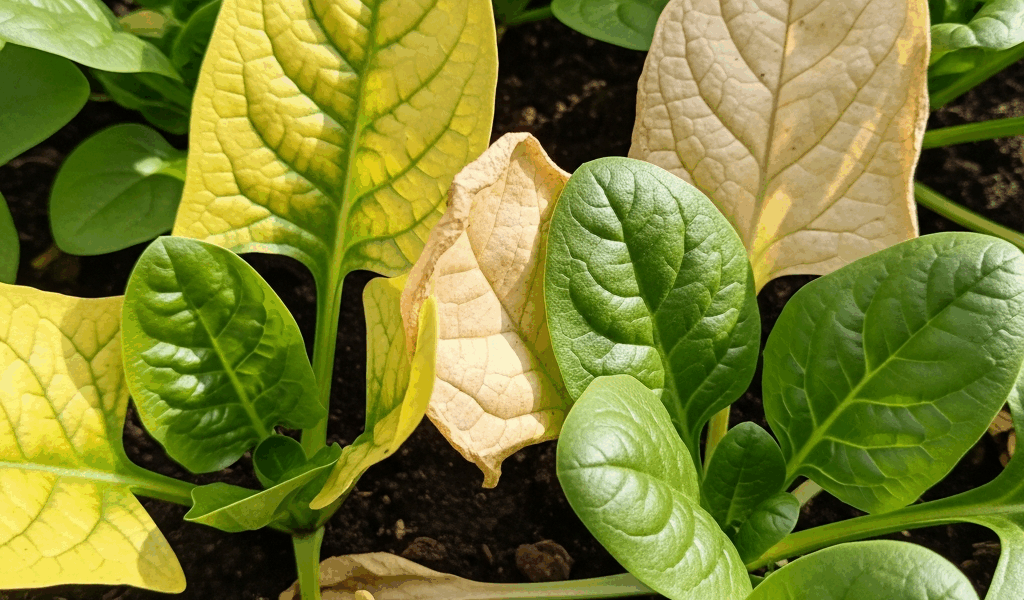
The location of yellowing is everything. Bottom leaves going pale first? Nitrogen is gone. Angular yellow patches with fuzzy gray stuff underneath? That’s fungal. Limp, waterlogged texture stem to tip? Drainage failure. Most gardeners see yellow and panic — they dump fertilizer or cut watering entirely without actually looking at where the color loss starts.
So, without further ado, let’s dive in. But first: spend five minutes actually examining your plants before doing anything. Flip the leaves. Squeeze the soil. Note whether yellow creeps inward from edges or climbs upward from the base. That pattern is your diagnosis. The fix for nitrogen deficiency is literally the opposite of the fix for overwatering — getting this wrong costs you the crop.
Nitrogen Deficiency Is the Most Common Cause
But what is nitrogen deficiency, really? In essence, it’s your soil running out of the primary fuel spinach burns through to produce those tender green leaves. But it’s much more than that — it’s a signal that your bed can’t keep pace with how aggressively spinach feeds.
If older, lower leaves went pale yellow first and the rest of the plant looks generally washed out, nitrogen is almost certainly gone. I’ve watched this happen mid-season in my raised beds — the plants look fine week one, rough week two, yellow week three. Sandy soils are worst for this. Nitrogen leaches fast, sometimes within weeks of a heavy rain.
The fix is straightforward. Side-dress with a balanced 10-10-10 fertilizer, about two inches from the stem — roughly one tablespoon per plant scratched into the top inch of soil. Water it in immediately. New leaf color returns within 7–10 days if nitrogen was actually the culprit. If it doesn’t improve by day ten, you’re dealing with something else.
I’m apparently an organic-and-synthetic hybrid gardener, and Espoma Garden-Tone works for me while slow-release organics alone never quite cut it when I’m already two weeks behind. Jobe’s Organics granules are solid too. Honestly, either works — synthetics just move faster when you’re racing the clock. Don’t make my mistake of waiting an extra week to see if the plant “bounces back” on its own.
Why Bottom Leaves Get Hit First
Plants pull nitrogen from old tissue to feed new growth. It’s a triage system — sacrifice the mature leaves, protect the future ones. That’s what makes spinach’s yellowing pattern so useful to us gardeners. The progression tells you exactly where in the crisis you are. Bottom leaves yellowing while the center stays green? Early stage. Catchable. Act now and the plant survives.
Overwatering or Poor Drainage Is Drowning the Roots
Yellowing spinach that feels limp or mushy at the base — paired with soil that’s still soaking wet three days after you last watered — signals a completely different emergency. I made this exact mistake twice before I understood what spinach actually needs. Consistent moisture, yes. Roots sitting in standing water for 48 hours? No. That’s a death sentence.
Squeeze a handful of soil. If it drips and holds a tight ball, drainage is compromised. Pull one plant gently and check the roots. Healthy spinach roots are white or light tan. Brown and soft means root rot has already begun — probably started days ago.
While you won’t need a full garden overhaul, you will need a handful of immediate fixes depending on your setup. Container growers should repot into fresh dry soil mixed with perlite at a 3:1 ratio — I’ve used Perlite Plus from a local nursery, about $8 a bag, and it solves drainage problems fast. In-ground growers need to stop watering entirely until the soil dries, then amend heavily with compost to rebuild airspace in the root zone.
Check soil moisture one inch down before every watering. Water only when it feels dry at that depth. Spinach does not need water every single day — probably should have led with that, honestly. Once roots go mushy and black, the plant is finished. Every extra day of wet soil shrinks the recovery window.
Why Soggy Soil Kills Spinach Faster Than Drought
Roots breathe. Waterlogged soil cuts off that oxygen supply within days — sometimes within one soggy week. Spinach isn’t resilient to this the way tomatoes or squash might be. It’s a cool-season crop built for steady, moderate conditions. One prolonged wet spell and the root system collapses before the leaves even show full symptoms.
Downy Mildew Is a Fungal Problem That Yellows Leaves Fast
Probably should have opened with this section, honestly — downy mildew shows up in my garden most seasons if I get sloppy about air circulation. The pattern is unmistakable once you’ve seen it: angular yellow patches on the top of leaves, grayish-purple or white fuzzy growth on the underside. That fuzz is the spore structure. It spreads fast in cool, humid mornings — which is also peak spinach season. Spring and fall, basically.
Frustrated by losing entire rows to an invisible pathogen, I started pulling infected leaves the moment I spotted them — cutting clean at the stem, bagging them immediately, never composting. Most home compost systems don’t consistently hit 160°F, so infected material just re-infects next season. Bag it. Trash it.
Improve air circulation. Space plants wider than the seed packet says — I go 6 inches minimum now instead of 4. Remove any leaves touching soil. Water at ground level, morning only, so foliage dries before evening. That single change cut my mildew losses significantly.
Sulfur-based fungicide might be the best option, as downy mildew requires repeated intervention rather than a single treatment. That is because the fungus persists in debris and reinfects from soil — one application doesn’t end it. Apply every 7–10 days from first symptom. Standard rate is 1–2 tablespoons per gallon of water, sprayed until leaves are thoroughly coated. Bonide Sulfur Dust works. So does Monterey Liqui-Cop.
Here’s the harder lesson I wish someone told me earlier: variety selection beats treatment almost every time. ‘Bloomsdale Long Standing’, ‘Space’, and ‘Teton’ all carry strong downy mildew resistance. If it appears in your garden most seasons — and it will — plant resistant varieties next time. That’s what makes prevention so much more endearing to us spinach growers than chasing fungicide schedules every spring.
What You Should Do Right Now to Fix It
First, you should identify the pattern — at least if you want to avoid treating the wrong problem entirely. Bottom leaves yellowing upward? Feed nitrogen today. Soggy soil with mushy stem bases? Stop watering, fix drainage, check roots. Angular yellow patches with fuzzy undersides? Remove infected leaves immediately and start a fungicide schedule or open up air circulation.
Spinach is a short-season crop. That’s what makes timing so critical here. Two weeks of wrong treatment — or worse, no treatment — costs real harvests because spinach bolts fast or goes too mature to eat. Caught early, all three of these problems are fixable. Your crop survives. Wait too long, and you’re starting over.
Related plant diagnosis: If several crops are yellowing, compare the patterns in our guides to yellow bean leaves and yellow zucchini leaves before treating the whole garden the same way.


Stay in the loop
Get the latest the gardening nook updates delivered to your inbox.