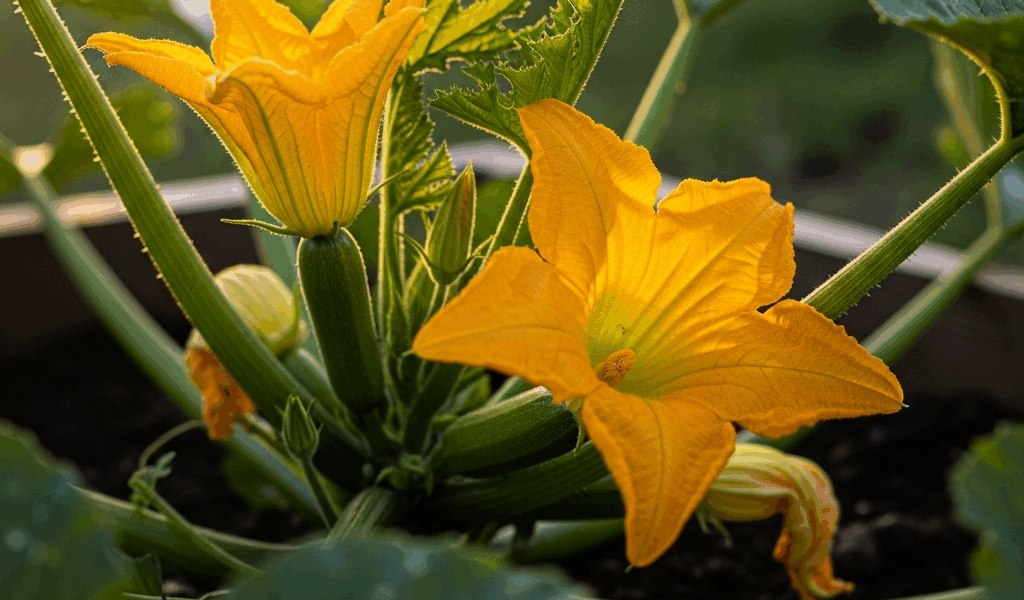
Your zucchini plant is covered in big golden flowers, they open for a day, and then they fall off. No fruit. Just wilted blossoms on the ground. Before you rip the plant out and start Googling what went wrong, take a breath — because there is an excellent chance nothing is wrong at all.
Male Flowers Fall Off — That Is Completely Normal
The first flowers your zucchini produces are almost always male. Every single one of them. The plant sends out a wave of male blooms days or even weeks before the first female flower appears. Those male flowers open in the morning, release pollen, and by the next day they wilt and drop. That is their entire purpose — they are pollen dispensers, not fruit producers.
Here is how to tell the difference: look at the stem behind the flower. A male flower sits on a thin, straight stem — nothing behind it but stem. A female flower has a tiny miniature zucchini — a swollen bulge — right behind the petals. That little bulge is the ovary, and it is what becomes your zucchini if pollination goes well. If the flowers falling off your plant all have thin straight stems and no bulge, those are males doing exactly what they are supposed to do. Give it a week or two. The females are coming.
I remember my first season growing zucchini. I watched about twenty beautiful flowers open, wilt, and drop, and I was convinced the plant was dying. My neighbor — a retired master gardener who grew zucchini the size of baseball bats — walked over, glanced at the stems, and said “those are boys, give it two weeks.” She was right. The female flowers showed up on schedule and I had more zucchini than I could give away by August.
Female Flowers Dropping — Now Pay Attention
If you are seeing flowers with that little zucchini bulge behind them turn yellow, shrivel, and drop — that is a different story. Those are female flowers that failed to get pollinated, and the plant is aborting them rather than trying to develop unpollinated fruit.
The most common reason is simply a lack of pollinators. Bees do most of the work transferring pollen from male to female zucchini flowers, and if your garden does not have enough bee activity — maybe you are in an urban area, maybe a neighbor is spraying pesticides, maybe it has been raining all week and the bees stayed home — the pollen never makes the trip.
Timing matters too. Male and female flowers are not always open on the same day. A female flower might open on Tuesday but the nearest male flower did not open until Thursday. Pollen from a spent male is useless — it needs to be fresh, transferred the same morning the female opens. With only one zucchini plant, your window for natural pollination is narrow. This is why experienced gardeners plant at least two or three zucchini plants — it increases the odds that male and female flowers overlap.
High humidity is another sneaky culprit. In muggy conditions above 80 percent humidity, pollen grains clump together and stick to the male flower instead of transferring freely. The bees might visit but they cannot carry the clumpy pollen effectively. There is not much you can do about weather, but hand pollination solves this completely.
How to Hand Pollinate Zucchini
Hand pollination takes thirty seconds per flower and works every time when done correctly. Go out in the morning between 7 and 10 AM — this is when zucchini flowers are fully open and the pollen is most viable.
Find a male flower that opened that morning. You will know it is fresh because the petals are wide open and the central stamen is covered in bright yellow pollen. Pick the entire male flower off the plant. Gently peel back or tear off the petals to expose the pollen-covered stamen — it looks like a small yellow club in the center.
Now find an open female flower. Look inside for the stigma — it is the multi-lobed structure in the center. Take your male flower stamen and dab it directly onto the stigma, rubbing gently to transfer as much pollen as possible. You want visible yellow pollen on the stigma when you are done. That is it. One male flower can pollinate two or three females if it has enough pollen.
If you do not want to sacrifice a male flower, a small clean paintbrush works as an alternative. Swirl the brush inside a male flower to collect pollen, then paint it onto the female stigma. Same result, slightly more fiddly, but it preserves the male flower for bee visits later in the day.
Other Reasons Zucchini Drops Flowers
Even properly pollinated zucchini plants will sometimes drop flowers, and it is usually the plant being smarter than you think.
Heat stress above 90 degrees Fahrenheit causes pollen to become nonviable before it can do its job. The flowers open, the bees visit, but the pollen is already dead. There is nothing wrong with your plant or your pollinators — the temperature killed the pollen before it could work. In sustained heat waves, expect lower fruit set and plan for a production rebound when temperatures drop back into the 80s.
Too much nitrogen pushes the plant into leaf production at the expense of fruit. If your zucchini is an absolute monster of green foliage with enormous leaves but keeps dropping flowers, you probably over-fertilized with a high-nitrogen fertilizer. Back off the feeding and let the plant redirect energy toward reproduction. Switch to a phosphorus-heavy fertilizer (bone meal works) to encourage flowering over foliage.
The plant is already maxed out. A single zucchini plant can realistically support three to four developing fruits at once. If it already has several zucchini growing, it will drop new female flowers because it simply does not have the energy to feed more. Harvest the existing zucchini when they reach 6 to 8 inches — do not wait for them to become giant — and the plant will start setting new fruit immediately.
Setting Up for Better Pollination Next Time
Plant pollinator-attracting flowers directly next to your zucchini. Zinnias, marigolds, and borage are the proven winners — they bloom continuously through summer and draw bees to the area all day. I plant a ring of zinnias around my zucchini hills every year and the bee traffic is noticeably higher than in beds without companion flowers.
Avoid using any pesticides — including organic ones like neem oil — during the morning hours when zucchini flowers are open and bees are actively foraging. If you need to spray for pests, do it in the evening after the flowers have closed.
Plant at least two zucchini plants, ideally three. More plants means more flowers opening on any given morning, which dramatically increases the overlap between male and female bloom timing. Space them 3 to 4 feet apart so each plant has room to sprawl without shading its neighbors.
Water consistently — deep soaking at the base every other day rather than light daily sprinkling. Zucchini plants under water stress abort flowers as a survival mechanism, prioritizing their own roots and leaves over reproduction. Mulch around the base to hold moisture between watering sessions, and your flower drop problems should be a thing of the past.


Stay in the loop
Get the latest the gardening nook updates delivered to your inbox.