Garden tool maintenance has gotten complicated with all the YouTube videos and “essential” products flying around. As someone who learned tool care from my grandfather (and ruined more than a few good tools in the process), I learned everything there is to know about keeping garden tools working like they should. Today, I will share it all with you.
Your garden tools are an investment. Take care of them properly, and they’ll last decades. Ignore them, and you’ll be shopping for replacements in a few seasons. The difference comes down to a handful of simple habits that honestly take less time than you’d think.
Why Tool Maintenance Actually Matters
I’ll be honest—I didn’t really get tool maintenance when I first started gardening. I’d leave my tools wherever they landed after use, sometimes for days. Then I tried using those same pruners on a stubborn rose stem and nearly threw my back out trying to force them closed.
That’s what makes sharp, clean tools endearing to us gardeners—they make everything easier. Sharp pruners cut cleanly without crushing plant tissue (which reduces disease and helps plants heal faster). Clean spades slice through soil without you having to stomp on them like you’re trying to break through concrete. Oiled handles don’t splinter your hands or crack after a season.
And here’s the thing nobody tells you: well-maintained tools are safer. Dull blades need more force and slip more easily. That’s how accidents happen.
The best part? Quality tools that get regular care can last 20, 30, even 50 years. My neighbor still uses the hand-me-down spade from his grandmother. It works because someone along the way cared enough to maintain it properly.
What You Actually Need for Tool Maintenance
Before you buy anything, check what you already have. Most people own half this stuff already:
- Wire brush or steel wool – For rust and dried-on dirt
- Mill file (10-inch) – Sharpens spades, hoes, larger blades
- Whetstone or diamond file – For pruners and finer edges
- Boiled linseed oil – Conditions wooden handles
- Light machine oil or WD-40 – Protects metal and pivot points
- Bucket of sand mixed with oil – Quick-cleans digging tools (optional but brilliant)
- Clean rags – For everything
- Rubbing alcohol or diluted bleach – Disinfects cutting tools
Probably should have led with this section, honestly. You don’t need fancy equipment. Most of this costs under $30 total.
After-Use Care (The Stuff That Actually Matters)
The most important maintenance? What you do right after using your tools. Do this consistently, and you’ll prevent 90% of tool problems.
Digging Tools (Spades, Shovels, Forks, Trowels)
Knock off loose soil while it’s still wet. Dried clay turns into cement. For the stubborn bits, use a putty knife or scrape it off with the edge of another tool. Wipe the blade with an oily rag before you hang it up.
Some gardeners keep a bucket of coarse sand mixed with motor oil by their tool storage. Plunge your digging tools in, swish around, done. It cleans and oils in one step. I thought this was overkill until I tried it—now I’m a convert.
Cutting Tools (Pruners, Loppers, Shears)
Wipe the blades clean after use. Sap and plant bits turn gummy and attract more dirt. For heavy sap buildup, use rubbing alcohol or a commercial sap remover. Coat the blade lightly with oil before storing.
If you’ve been cutting diseased plants, disinfect with rubbing alcohol or 10% bleach solution before moving to healthy plants. I learned this one the hard way after spreading fire blight through three apple trees.
Watering Equipment
Drain hoses after each use to stop algae from growing inside (yes, that happens). Store spray nozzles pointed down so water drains from the mechanism. When it freezes, bring hoses and attachments indoors or they’ll crack.
Sharpening: Easier Than It Sounds
Sharp tools are safe tools. That sounds backwards, but dull blades need more force and slip easier. Most garden tools need sharpening a few times each season.
Sharpening Spades and Hoes
Clamp the tool down or brace it solidly. Using a mill file, work in one direction only, following the existing angle (usually about 45 degrees). Press on the push stroke, lift on the return. Ten to fifteen strokes per side does it for routine touch-ups.
For badly damaged edges, you might need more passes or a grinder to get started. But honestly, if you’re starting from scratch like that, you’ve waited too long.
Sharpening Pruners and Loppers
Most bypass pruners have one beveled blade and one flat blade. Only sharpen the beveled side—maintain the original angle, typically 10-20 degrees. Use a whetstone or diamond file, working from the pivot toward the tip.
Remove any burr from the flat side with a few light passes. Oil the pivot, test the action. The blades should meet precisely without gaps. If they don’t, you’ve removed too much metal or the angle’s off.
Sharpening Lawn Mower Blades
Disconnect the spark plug first (seriously, do this). Remove the blade, clamp it securely, and sharpen with a file or angle grinder. Keep the original 30-45 degree bevel.
Check balance by hanging the blade on a nail through the center hole. If one side drops, file more from that end. Unbalanced blades vibrate and damage the mower. Ask me how I know.
Rust: Prevention and Removal
Rust is inevitable if you garden in a humid climate. Prevention beats cure every time.
Preventing Rust
- Dry tools before storing them
- Apply a thin coat of oil to metal surfaces
- Store somewhere dry with decent air circulation
- Hang tools instead of standing them on concrete (concrete wicks moisture)
- Run a dehumidifier in damp climates
Removing Rust
For light surface rust, scrub with a wire brush or steel wool, then oil immediately. For heavier rust, soak overnight in white vinegar, scrub with steel wool, rinse thoroughly, dry completely, and oil well.
Severely pitted tools might need a wire wheel on a drill or grinder. The key is catching rust early. Light surface rust is cosmetic, but deep pitting weakens the metal structurally.
Handle Care and Replacement
Wooden handles dry out and crack. At the start of each season, inspect for damage. Sand any rough spots with medium-grit sandpaper. Apply boiled linseed oil (not raw—it stays tacky forever) with a rag, let it soak in, wipe off excess. Do this annually or whenever handles look dry.
Replace cracked or broken handles immediately. They’re dangerous. Most quality tools accept replacement handles from hardware stores. Drill out the old rivet or pin, insert the new handle, secure with epoxy and a new pin or wedge.
Seasonal Maintenance Schedule
Spring
- Inspect all tools for winter damage
- Sharpen all cutting and digging tools
- Oil wooden handles
- Tighten loose screws or bolts
- Replace worn or damaged tools
- Clean and test sprayers and watering equipment
Mid-Season
- Touch up edges on frequently used cutting tools
- Clean built-up sap from pruners
- Check hoses for leaks and repair
- Re-oil tools showing rust signs
Fall/End of Season
- Thoroughly clean all tools
- Remove all soil, sap, and plant material
- Sharpen everything for next spring
- Apply heavier coat of oil for winter storage
- Drain and store hoses
- Winterize power equipment per manufacturer instructions
- Apply linseed oil to handles
Power Tool Maintenance
Gas and electric tools need extra attention:
Gas-Powered Equipment
- Change oil per manufacturer schedule
- Replace air filters annually (more often if dusty)
- Use fresh fuel—gas degrades after 30 days
- Add fuel stabilizer if storing more than a month
- Replace spark plugs annually
- Clean cooling fins to prevent overheating
Electric and Battery Tools
- Keep vents clear
- Check cords for damage before each use
- Store batteries partially charged (40-60%) in moderate temperatures
- Keep battery contacts clean
- Never leave batteries on the charger indefinitely
Storage Solutions That Work
How you store tools matters as much as how you clean them:
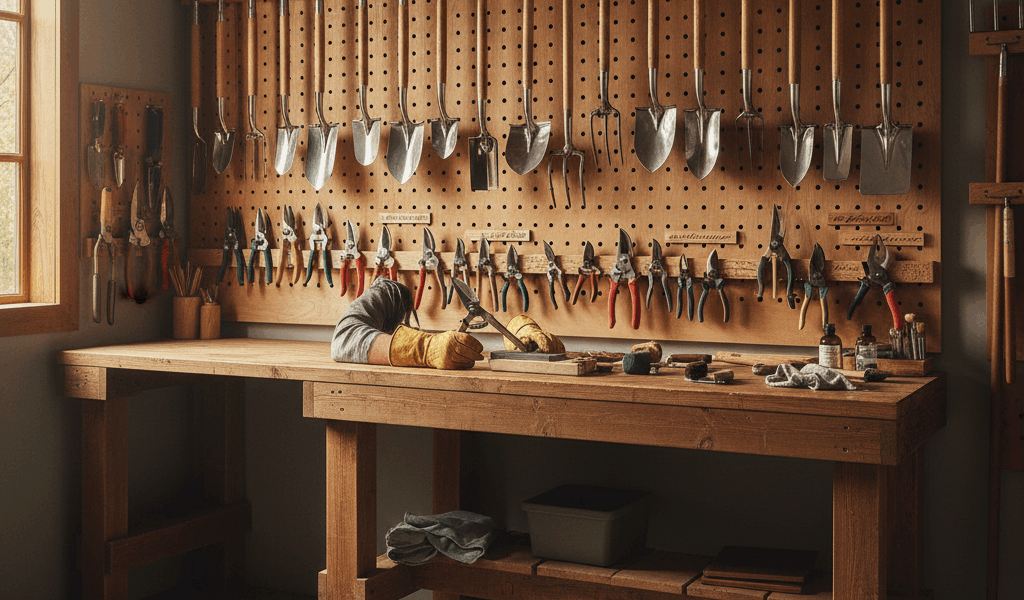
- Hang long-handled tools on wall hooks or pegboard. Keeps them off damp floors and prevents warping
- Store small tools in buckets of oiled sand or in a dry drawer
- Keep cutting tools in blade guards or wrapped in oiled cloth
- Designate a maintenance area with supplies readily available
- Create a tool inventory so you know what you have and can spot missing items
Replace vs. Repair: When to Give Up
Quality tools deserve maintenance, but sometimes replacement makes more sense:
Replace when:
- Handles are cracked through or severely splintered
- Metal is deeply pitted with rust
- Blades are bent or chipped beyond repair
- Springs in pruners are broken or weak
- Repair costs exceed 50% of replacement cost
Repair when:
- Handles just need sanding or oiling
- Tools need routine sharpening
- Surface rust can be removed
- Loose parts can be tightened
- The tool has sentimental or antique value
Building Maintenance Habits
The secret to tool maintenance isn’t fancy technique. It’s doing the basics consistently:
- Clean as you go. Wipe tools before putting them away. Every time.
- Keep supplies handy. Rag and oil by the tool rack makes it automatic.
- Schedule seasonal tune-ups. Put it on your calendar or you’ll forget.
- Inspect before use. Quick check catches problems early.
- Invest in quality. Good tools are easier to maintain and last longer.
Your garden tools are partners in creating something beautiful and growing real food. Treat them right, and they’ll serve you faithfully for decades. There’s something satisfying about reaching for a sharp spade or a well-oiled pruner—simple pleasures that remind you why you garden in the first place.