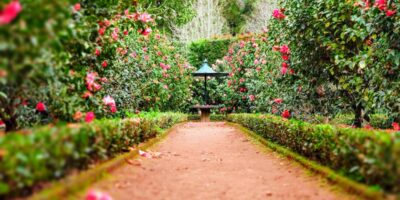
A beautiful flower garden isn’t random—it’s designed. Understanding color theory, plant heights, and bloom timing transforms a collection of plants into a cohesive garden that delights across the seasons.
Color Theory for Gardeners
The Color Wheel
The color wheel is your garden design friend. Colors opposite each other (complementary colors) create vibrant contrast. Colors next to each other (analogous colors) create harmony.
- Complementary pairs: Purple and yellow, red and green, orange and blue
- Analogous groups: Red-orange-yellow, blue-purple-pink, yellow-green-blue
Hot Colors vs. Cool Colors
Hot colors (red, orange, yellow) advance visually—they seem closer than they are. Use them to draw attention, create focal points, or make large spaces feel cozier. Hot colors energize a garden.
Cool colors (blue, purple, soft pink) recede visually—they make spaces feel larger and more tranquil. Use them to create depth, calm busy areas, or extend small gardens visually.
The Role of White
White is the garden peacemaker. It separates clashing colors, brightens shade, and glows at dusk. A garden with too many colors feels chaotic; add white flowers to calm it down.
The Role of Green
Foliage is the backdrop against which flowers perform. Different greens (blue-green, yellow-green, dark green) provide subtle variation. Silver and purple foliage add drama without more flowers.
Working with Heights
The Classic Approach
Traditional borders place tall plants in back, graduating to short plants in front. This ensures everything is visible:
- Tall (4-6+ feet): Delphiniums, hollyhocks, Joe-Pye weed, ornamental grasses
- Medium-tall (3-4 feet): Phlox, coneflowers, rudbeckia, bee balm
- Medium (2-3 feet): Daylilies, salvia, coreopsis, astilbe
- Low (1-2 feet): Catmint, geraniums, dianthus, heuchera
- Edging (under 12 inches): Sweet alyssum, creeping phlox, thyme
Breaking the Rules
Strict height graduation can look stiff. Add interest by:
- Bringing some tall, airy plants (like verbena bonariensis) to the front—you see through them
- Creating height variation within layers
- Using vertical accents (ornamental grasses, yuccas) at intervals
Mastering Bloom Time
The Succession Challenge
Most flowers bloom for only 2-4 weeks. A garden with everything blooming at once looks spectacular briefly, then dull for months. The goal is overlapping waves of bloom.
Bloom Time Categories
Early Spring (March-April): Crocus, daffodils, tulips, bleeding heart, creeping phlox, hellebores
Late Spring (May-June): Peonies, iris, alliums, baptisia, catmint, columbine
Early Summer (June-July): Daylilies, coreopsis, shasta daisies, yarrow, lavender
Midsummer (July-August): Coneflowers, black-eyed Susans, phlox, bee balm, lilies
Late Summer (August-September): Russian sage, sedum, helenium, Joe-Pye weed
Fall (September-October): Asters, goldenrod, chrysanthemums, ornamental grasses, anemones
Planning for Succession
Create a bloom calendar for your garden. List what blooms each month and identify gaps. If July is bare, add more midsummer bloomers. If spring is packed but fall is empty, add asters and sedums.
Design Principles
Repetition Creates Rhythm
Repeat key plants or colors throughout the garden. This creates visual flow that guides the eye. Plant the same ornamental grass at intervals. Echo purple flowers from front to back.
Odd Numbers Look Natural
Groups of 3, 5, or 7 plants look more natural than pairs or squares. Even professional designers follow this rule.
Masses Over Singles
One plant of many types looks like a collection. Masses of fewer types look like a garden. Plant at least 3 of each variety, more for smaller plants.
Create Focal Points
Every view needs somewhere for the eye to rest. This might be a specimen plant, a garden ornament, a bold color mass, or an interesting structure.
Putting It Together: A Sample Design
Cool Color Border (for partial shade)
- Back: White astilbe, blue hosta, Japanese anemone (white)
- Middle: Blue Siberian iris, pink bleeding heart, blue brunnera
- Front: Purple heuchera, blue forget-me-nots, white sweet woodruff
Hot Color Border (for full sun)
- Back: Red hot poker, orange daylilies, gold black-eyed Susans
- Middle: Red bee balm, orange coneflowers, yellow coreopsis
- Front: Red dianthus, orange marigolds, gold sedum
Common Design Mistakes
One of everything: Creates a disjointed collection, not a garden. Edit and group.
Ignoring foliage: Flowers are fleeting; foliage is all season. Choose plants with good leaves.
Forgetting structure: All flowers and no bones makes gardens shapeless. Add evergreen shrubs, ornamental grasses, or hardscaping for year-round structure.
Planting too close: Immediate gratification leads to overcrowding. Use mature sizes for spacing.
No winter interest: Gardens exist in winter too. Include evergreens, interesting bark, ornamental grasses, and plants with persistent seed heads.
Start Simple
If this feels overwhelming, start with a simple color scheme (perhaps blue and yellow) and three plants that bloom at different times. Add more as you learn. The best flower gardens evolve over years, shaped by observation and experimentation.
Your eye will develop. What looks good to you now will look different in five years. That’s not a problem—it’s the joy of gardening. Every season teaches you something new.