When you want guaranteed color all season long, nothing beats annual flowers. While perennials take years to establish and bloom for just a few weeks, annuals hit the ground running and keep producing flowers from planting until frost. Here are the best performers for nonstop color.
What Makes an Annual?
True annuals complete their entire life cycle in one season: germinate, grow, bloom, set seed, and die. They put all their energy into reproduction, which means continuous flowering in their race to set seed.
Many plants we treat as annuals are actually tender perennials from warmer climates—they’d live for years in their native tropics but can’t survive our winters. The effect is the same: you plant them fresh each year and enjoy reliable color all season.
The Top Performers
For Sun
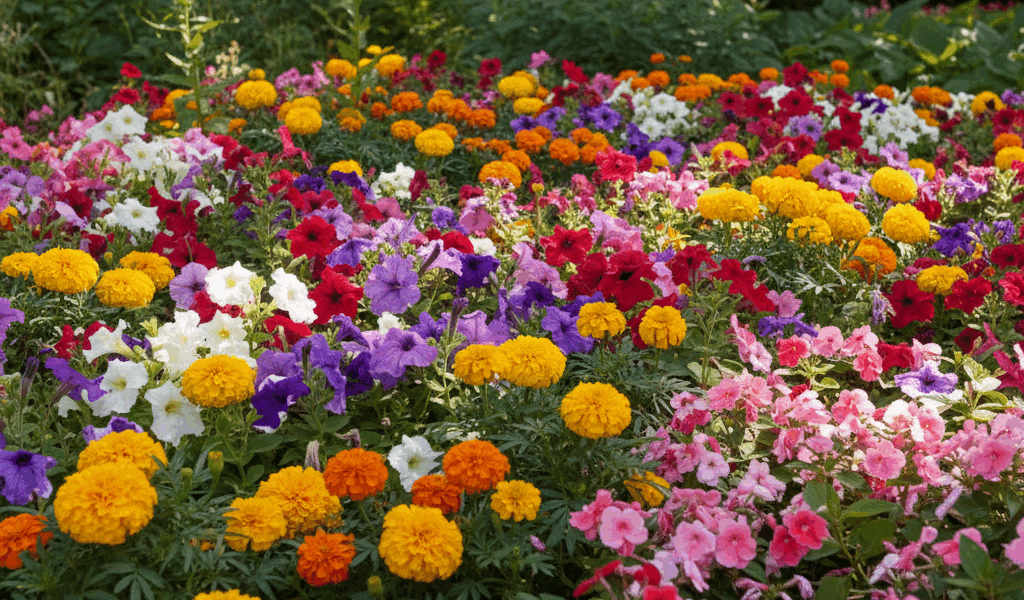
Marigolds: The workhorse of summer gardens. African marigolds grow tall with huge pom-pom flowers. French marigolds stay compact with smaller blooms. Both bloom continuously in heat that stops other flowers. Bonus: they may repel some garden pests.
Zinnias: From dainty cut flowers to giant dinner-plate blooms, zinnias deliver. They thrive in heat and laugh at drought. Plant successions every few weeks for endless cutting flowers. Butterflies love them.
Petunias: Modern petunias have overcome their reputation for legginess. Wave and Supertunia types spread into flowering carpets. Excellent for containers, hanging baskets, and garden beds. Continuous bloom with minimal deadheading.
Lantana: Heat and drought? Lantana says bring it on. Butterfly magnet with clusters of flowers that change color as they age. Spreads into substantial plants by season’s end.
Sunflowers: Not just the giant heading types—branching sunflowers produce dozens of cut flowers per plant. Pollinators love them, birds eat the seeds. Few things are more cheerful.
Cosmos: Airy, graceful, and tough. Cosmos bloom profusely with ferny foliage that fills gaps beautifully. They self-sow, coming back year after year if you let them.
For Shade
Impatiens: The classic shade annual, back after disease issues with resistant varieties. New Guinea types handle more sun. Continuous mounds of color with zero deadheading required.
Begonias: Wax begonias are reliable workhorses. Tuberous begonias offer spectacular flowers. Dragon wing types cascade beautifully. All thrive in shade with consistent moisture.
Coleus: Technically grown for foliage, but what foliage! Every color combination imaginable. Pinch flowers to keep them bushy. Easy from cuttings—root extras indoors for next year.
Torenia (Wishbone Flower): Underused shade champion with charming bicolor flowers resembling tiny snapdragons. Blooms continuously in conditions that stump other flowers.
For Containers
Calibrachoa (Million Bells): Miniature petunia relatives that trail beautifully. Bloom in cascading waves all season. Heat and drought tolerant once established.
Verbena: Trailing types are perfect for container edges. Clusters of flowers in brilliant colors all season. Attracts butterflies and takes heat well.
Sweet Potato Vine: Ornamental, not edible (though related). Chartreuse ‘Marguerite’ brightens any combination. Purple ‘Blackie’ adds drama. Grows vigorously—one plant can trail several feet.
Geraniums: Traditional for a reason. Consistent bloomers that handle dry conditions. Excellent in window boxes where regular watering is difficult.
Maximizing Annual Performance
Start Strong
Prepare soil well—annuals will live in it all season. Add compost for nutrients and water retention. Space plants according to mature size, not current size. They fill in fast.
Feed Regularly
Annuals are heavy feeders—they grow fast and bloom constantly. Use slow-release fertilizer at planting, then supplement with liquid fertilizer every 2-3 weeks during peak growing season.
Water Consistently
Most annuals need regular moisture, especially in containers. Wilting stresses plants and interrupts flowering. Mulch beds to retain moisture and reduce watering needs.
Deadhead When Needed
Some modern annuals are “self-cleaning”—spent flowers drop on their own. Others benefit from deadheading to prevent seed formation and encourage continued blooming. Quick weekly grooming keeps plants productive.
Don’t Be Afraid to Cut
Cutting flowers for bouquets encourages more blooms. Leggy plants can be cut back by one-third to promote bushier growth. Annuals are resilient—they respond to cutting with renewed vigor.
Color Combinations That Work
Classic Combinations
- Red, white, and blue: Red geraniums, white petunias, blue lobelia
- Hot colors: Orange marigolds, red zinnias, yellow lantana
- Cool colors: Purple petunias, pink verbena, white sweet alyssum
Thriller, Filler, Spiller
The classic container formula works in beds too:
- Thriller: Tall focal point (cannas, tall zinnias, ornamental grass)
- Filler: Medium plants filling middle (petunias, marigolds, begonias)
- Spiller: Trailing plants at edges (sweet potato vine, calibrachoa)
Annuals for Specific Purposes
For Cut Flowers
Zinnias, cosmos, sunflowers, snapdragons, celosia
For Fragrance
Sweet alyssum, heliotrope, nicotiana, stock, petunias
For Pollinators
Zinnias, cosmos, sunflowers, lantana, pentas
For Dry Conditions
Lantana, portulaca, dusty miller, vinca (annual periwinkle)
Make Them Last
Many annuals can survive light frosts with protection, extending your display into fall. Cover with sheets or floating row covers on cold nights. Some—like pansies, snapdragons, and ornamental cabbage—actually prefer cool weather and look best in spring and fall.
When hard frost finally ends the season, you’ll have enjoyed months of continuous color. And next spring? A fresh canvas awaits, ready for new experiments and reliable favorites alike.