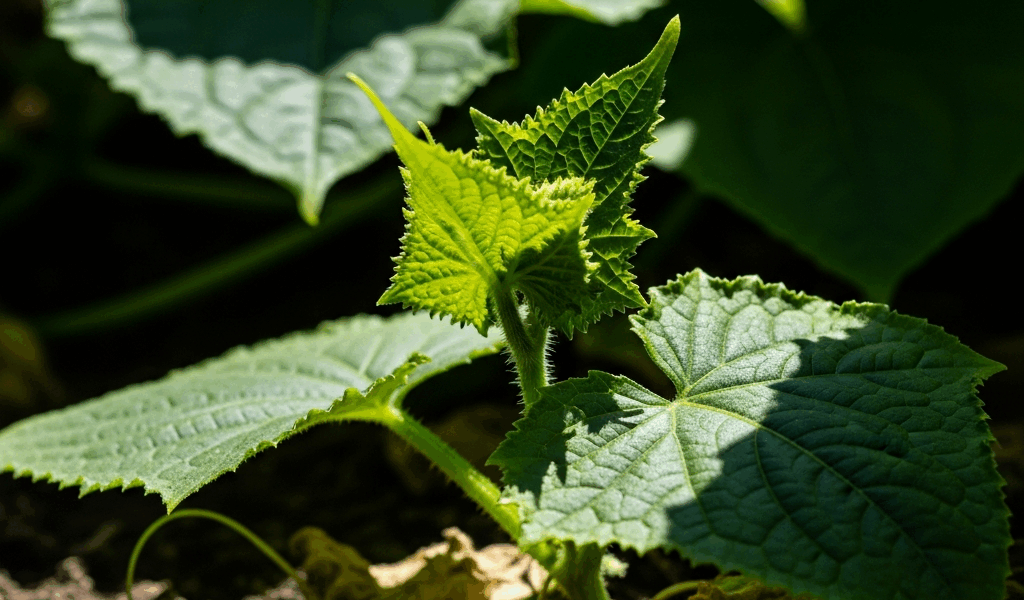
Why Cucumber Leaves Curl Upward
Cucumber leaf curl has gotten complicated with all the conflicting advice flying around. And honestly, I understand the panic — you walk out to your garden one morning and your plants look like they’re folding in on themselves. I got two emails about this exact thing last week alone.
But here’s what nobody actually tells you upfront: upward curl and downward curl are completely different problems. Your plant isn’t dying. It’s stressed, and — this is the part I wish someone had told me earlier — it’s actually communicating something specific. You just have to know the language.
I wasted three growing seasons throwing the wrong fixes at this problem because I treated all leaf curl as one thing. The direction matters enormously. Upward curl means environmental stress or pests feeding on the underside. Today, I’ll share everything I’ve figured out — four causes, how to tell them apart, and what actually works.
Heat and Sun Stress Are the Most Common Culprits
It was a 92-degree July afternoon when I first really saw it happen. My cucumber leaves transformed within a few hours — edges rolling upward like tiny green boats, the whole plant looking limp despite soil I’d watered that morning. By 7 p.m., they’d almost completely straightened out. That was the moment I stopped panicking about cucumber curl forever.
When temps spike above 85°F — especially combined with direct, intense sun — cucumbers naturally reduce the leaf surface area exposed to radiation. Edges cup and roll inward. The margins feel slightly papery or crispy. The whole plant looks wilted even when soil moisture is perfectly fine. This is smart plant behavior. It’s not a disease, and it’s not a death sentence.
The diagnostic tell here is timing. Worst in the afternoon, loosening by evening or next morning? Heat stress. Full stop. Temporary and reversible.
Here’s what actually works:
- Shade cloth — 30% shade cloth draped over your trellis or stakes cuts direct sun exposure by roughly a third. I use Agfabric brand, about $15 for a 6×8 ft piece. I’ve had the same piece for three seasons.
- Deep watering at dawn — Water at the base, never the leaves. Soak the root zone for a solid 20 minutes. Morning watering means the plant starts fully hydrated before peak heat arrives — not playing catch-up at noon.
- Heavy mulch — 3 inches of straw or wood chips around the base keeps soil temps stable and moisture consistent. I learned this the hard way after losing two plants in my first season. Don’t make my mistake.
Inconsistent Watering and Soil Moisture Problems
Probably should have opened with this section, honestly — because this was my biggest mistake for longer than I’d like to admit. I watered deeply twice a week on a fixed schedule, completely ignoring what was actually happening in the soil. Heat wave? Same schedule. Cool, overcast week? Same schedule. The plant was getting wildly erratic moisture signals, and the leaves started cupping upward at the edges as a result.
Underwatering pushes leaves to cup and roll inward as the plant tries to minimize water loss. Leaf margins go crispy. The whole plant wilts visibly. But — and this tripped me up badly — overwatered roots can get so stressed they stop absorbing water efficiently. You’ll see nearly identical upward cupping symptoms from both extremes. Maddening.
The fix isn’t “water more” or “water less.” It’s consistency and actually paying attention to the soil.
Use the finger test: Push your index finger 2 inches into the soil right at the plant base. Bone-dry means water immediately. Damp means wait. You’re aiming for that wrung-out sponge feeling — moist but not waterlogged. Check daily during heat waves, not weekly on a calendar.
Drip irrigation changed everything for me. I’m apparently a chronic over-scheduler, and a Raindrip starter kit (around $40) set on a 6 a.m. timer solved my inconsistency problem overnight. Root zone stays consistently moist. No more guessing, no more erratic signals to the plant.
Mulch pulls double duty here. It addresses both heat stress and watering problems simultaneously — cooler soil, more stable moisture between waterings. If you only do one thing this season, make it mulching.
Aphids and Broad Mites Cause Curling Too
Convinced it’s just environmental stress? Flip those leaves over before you touch your watering schedule. Pests masquerade as environmental problems constantly, and I’ve been fooled more than once.
Aphids cluster on leaf undersides — especially on young foliage near the growing tip — and feed on plant sap. As they drain fluid, leaves lose turgor and the edges cup upward. Looks almost identical to heat stress. The difference: pest-related curl spreads progressively and doesn’t reverse overnight. You’ll also sometimes spot sticky honeydew residue on lower leaves, or a dark sooty mold coating where that residue accumulates.
Broad mites are sneakier. They cause a tight, severe upward curl — more distorted than simple heat stress — often accompanied by a rough, bronzed, or bumpy texture on the leaf surface. They love warm, humid conditions, which makes July and August their peak season in most growing zones.
Diagnostic step: Grab a hand lens — basic 10x magnification runs $8–12 on Amazon — and inspect the underside of the youngest, most tightly curled leaves. Look for tiny greenish or translucent insects along the leaf veins. Broad mites are nearly invisible to the naked eye, so magnification isn’t optional here, it’s essential.
If you find aphids: Safer’s insecticidal soap, about $10 a bottle, applied in early morning or late evening works well. Spray both sides of every leaf thoroughly. Repeat every 5 days for 3 weeks if the population is established.
If you suspect broad mites: Neem oil diluted per label instructions, applied every 3 days for 2 weeks. Broad mites shrug off a lot of pesticides but respond to sulfur and neem. One caveat — sulfur can burn plants above 85°F, so early morning or evening application only. Check your local extension guidelines on that one.
When to Worry and When to Relax
Triaging this properly saves a lot of wasted effort and unnecessary panic. Here’s the honest breakdown.
Afternoon curl that fully reverses by morning? Not an emergency. No insects, no spots, straightens overnight — that’s heat and sun stress. Add shade, tighten up your watering consistency. You’ll see results within a few days.
Curl that persists and spreads to new leaves? Get that hand lens out and inspect the undersides. Sticky residue, rough texture, or visible insects point to aphids or broad mites. These escalate fast if you ignore them, so don’t wait a week before acting.
Curl paired with spots, yellowing, or severe leaf distortion? That combination might indicate cucumber mosaic virus — mottled yellowing, warped leaf shape, stunted growth. That’s beyond simple curl. If mosaic is what you’re looking at, remove and destroy affected plants immediately, wash your hands before touching anything else in the garden, and accept that there’s no cure. Prevention and containment are your only tools.
Most upward curl cases — genuinely most of them — resolve with one or two targeted adjustments. Shade, consistent watering, or a pest spray. You’ll see meaningful improvement within a week. That’s the good news here. Your plants are already telling you exactly what they need. The direction of the curl is the message — you just have to know how to read it.



Stay in the loop
Get the latest the gardening nook updates delivered to your inbox.